
Not Every Emoji Means Good News Online: Cyber Scam Awareness Tips for Internet Users

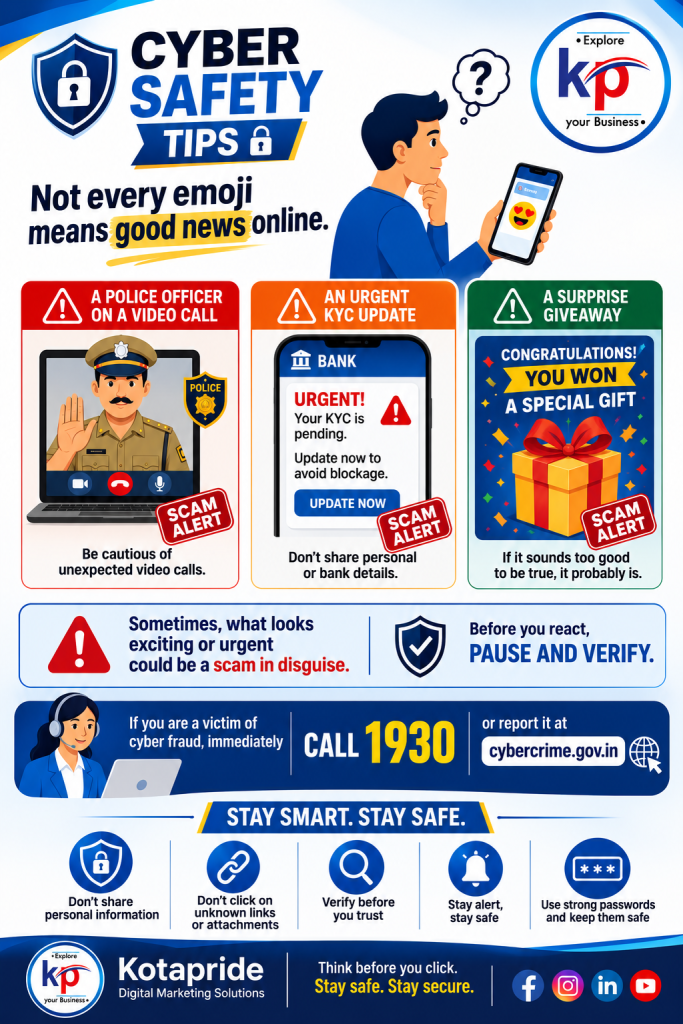
Not Every Emoji Means Good News Online: How to Spot Digital Scams Before It’s Too Late
In today’s digital world, emojis, attractive offers, and urgent messages have become a common part of our online lives. While many of these messages are genuine, cybercriminals are increasingly using familiar symbols, fake identities, and emotional tricks to deceive people.
A 🚔 police officer appearing on a video call, a ⚠️ sudden KYC update request, or a 🎁 surprise iPhone giveaway may seem convincing at first. However, these could be carefully planned cyber scams designed to steal your money, personal information, or both.
Common Online Scams You Should Watch Out For
🚔 Fake Police Video Calls
Cybercriminals often impersonate police officers, government officials, or cybercrime investigators. They may contact victims through video calls, accuse them of illegal activities, and threaten arrest unless they immediately transfer money.
Remember: Genuine law enforcement agencies do not demand money over phone or video calls.
⚠️ Urgent KYC Update Messages
Scammers send SMS, WhatsApp messages, or emails claiming your bank account, wallet, or SIM card will be blocked unless you update your KYC immediately.
These messages usually contain fake links that steal your login credentials or banking information.
Always verify through your bank’s official website or customer care before clicking any link.
🎁 Fake Giveaways and Lucky Draws
“Congratulations! You have won a brand-new iPhone.”
If you receive such messages unexpectedly, be cautious.
Most fake giveaways ask you to:
- Pay a small “processing fee”
- Share your OTP
- Download malicious apps
- Provide personal or banking details
Legitimate companies never ask winners to pay money to claim prizes.
Why Do These Scams Work?
Cybercriminals exploit human emotions like:
- Fear
- Excitement
- Curiosity
- Urgency
- Greed
When people panic or become overly excited, they are more likely to make quick decisions without verifying the information.
Stay Safe with These Cyber Security Tips
- ✔ Never share OTPs, passwords, or banking PINs.
- ✔ Verify unexpected messages before responding.
- ✔ Avoid clicking unknown links.
- ✔ Download apps only from trusted sources.
- ✔ Enable Two-Factor Authentication (2FA).
- ✔ Keep your devices updated.
- ✔ Think before you click.
Pause. Verify. Then Respond.
Whenever you receive an unexpected message asking you to act immediately, stop for a moment and ask yourself:
- Is this message genuine?
- Did I expect this communication?
- Can I verify it through an official source?
Taking just a few seconds to verify can save you from significant financial and emotional loss.
What to Do If You Become a Victim
If you suspect you have been targeted by cyber fraud:
- Immediately call the Cyber Crime Helpline: 1930
- Report the incident at: https://cybercrime.gov.in
The sooner you report the fraud, the greater the chances of preventing further financial loss.
Final Thoughts
Not every emoji, notification, or exciting offer online is what it appears to be. Cybercriminals are becoming smarter, but staying informed is your strongest defense.
Before you react, pause and verify. A few moments of caution can protect your identity, your money, and your peace of mind.
