

Online Blackmail Using Private Photos or Videos: What to Do If You’re Being Threatened
The internet has made it easier than ever to connect with people, but it has also created opportunities for cybercriminals to exploit trust and emotions. One of the most distressing forms of cybercrime is online blackmail, where criminals threaten to leak private photos or videos unless the victim pays money or complies with their demands.
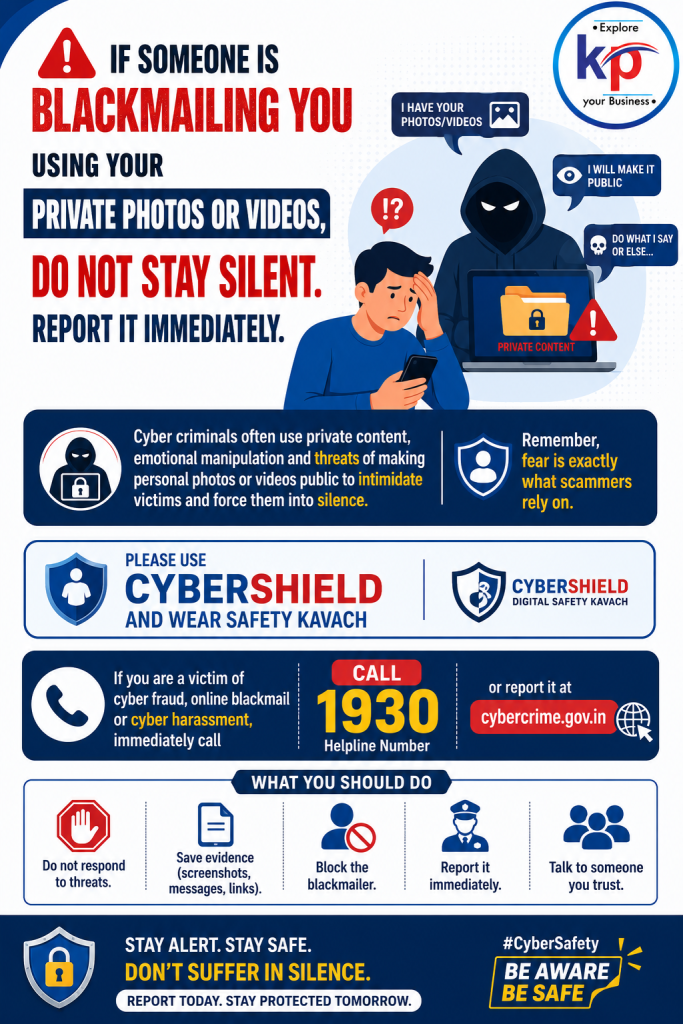
If someone is blackmailing you using your personal images or videos, do not stay silent. Report it immediately. The sooner you act, the better the chances of stopping the crime and protecting yourself.
What Is Online Blackmail?
Online blackmail, often referred to as sextortion or digital extortion, occurs when a cybercriminal obtains private photos, videos, or personal information and uses it to threaten the victim.
The criminal may demand:
- Money or cryptocurrency
- More private photos or videos
- Personal information
- Access to social media or email accounts
- Continued communication under threats
Their primary goal is to create fear and pressure the victim into making quick decisions.
How Cybercriminals Trap Victims
Cybercriminals use various tactics to gain victims’ trust before blackmailing them. Common methods include:
- Fake social media profiles
- Online dating scams
- Video call recording scams
- Hacked cloud storage or email accounts
- Fake job offers
- Phishing attacks
- Malware that steals personal files
Once they obtain sensitive content, they threaten to share it with family, friends, employers, or on social media.
Fear Is Their Biggest Weapon
Cybercriminals rely on fear, embarrassment, and panic to control victims.
They often send messages such as:
- “Pay within one hour.”
- “We’ll send your photos to everyone.”
- “Don’t contact the police.”
- “Delete this conversation after payment.”
These threats are designed to stop victims from seeking help.
Remember: Fear is exactly what scammers rely on.
Never Do These Things
If you are being blackmailed:
❌ Do not send money.
❌ Do not share more photos or videos.
❌ Do not believe promises that the content will be deleted.
❌ Do not delete important evidence.
❌ Do not suffer in silence.
Paying the criminal rarely solves the problem. In many cases, they demand even more money later.
What You Should Do Immediately
If someone is threatening you online:
1. Stop Communicating
Do not continue the conversation once you realize it is blackmail.
2. Save the Evidence
Take screenshots of:
- Messages
- Usernames
- Email addresses
- Phone numbers
- Payment requests
- Social media profiles
This evidence can help investigators.
3. Secure Your Accounts
- Change passwords immediately.
- Enable Two-Factor Authentication (2FA).
- Check your privacy settings.
- Scan your device for malware.
4. Report the Incident
Report the crime without delay.
- Call the National Cyber Crime Helpline: 1930
- Report online at: cybercrime.gov.in
Early reporting improves the chances of preventing further harm.
Protect Yourself from Online Blackmail
You can reduce your risk by following these cyber safety practices:
- Avoid sharing sensitive photos or videos online.
- Verify the identity of people you meet online.
- Never trust unknown video calls or screen recordings.
- Keep social media accounts private.
- Use strong, unique passwords.
- Enable Two-Factor Authentication.
- Be cautious when accepting friend requests from strangers.
- Keep your devices and security software updated.
Use CyberShield – Wear Your Safety Kavach
Think of CyberShield as your digital safety mindset.
Before sharing personal information or interacting with strangers online:
- Verify identities.
- Protect your privacy.
- Think before you click.
- Report suspicious activity immediately.
Your awareness is your strongest defense against cybercrime.
You Are Not Alone
Online blackmail can happen to anyone, regardless of age or profession. Feeling embarrassed is natural, but staying silent only helps the criminal.
Reporting the incident quickly gives authorities the opportunity to investigate and may prevent others from becoming victims.
Final Thoughts
Cybercriminals thrive on fear, secrecy, and urgency. Don’t let them control you.
If someone is threatening to leak your private photos or videos:
- Do not panic.
- Do not pay.
- Save the evidence.
- Report it immediately.
Protect yourself, support others, and spread awareness. Together, we can build a safer digital world.

