
Catch the Rain 2026 | Importance of Rainwater Harvesting and Water Conservation in India

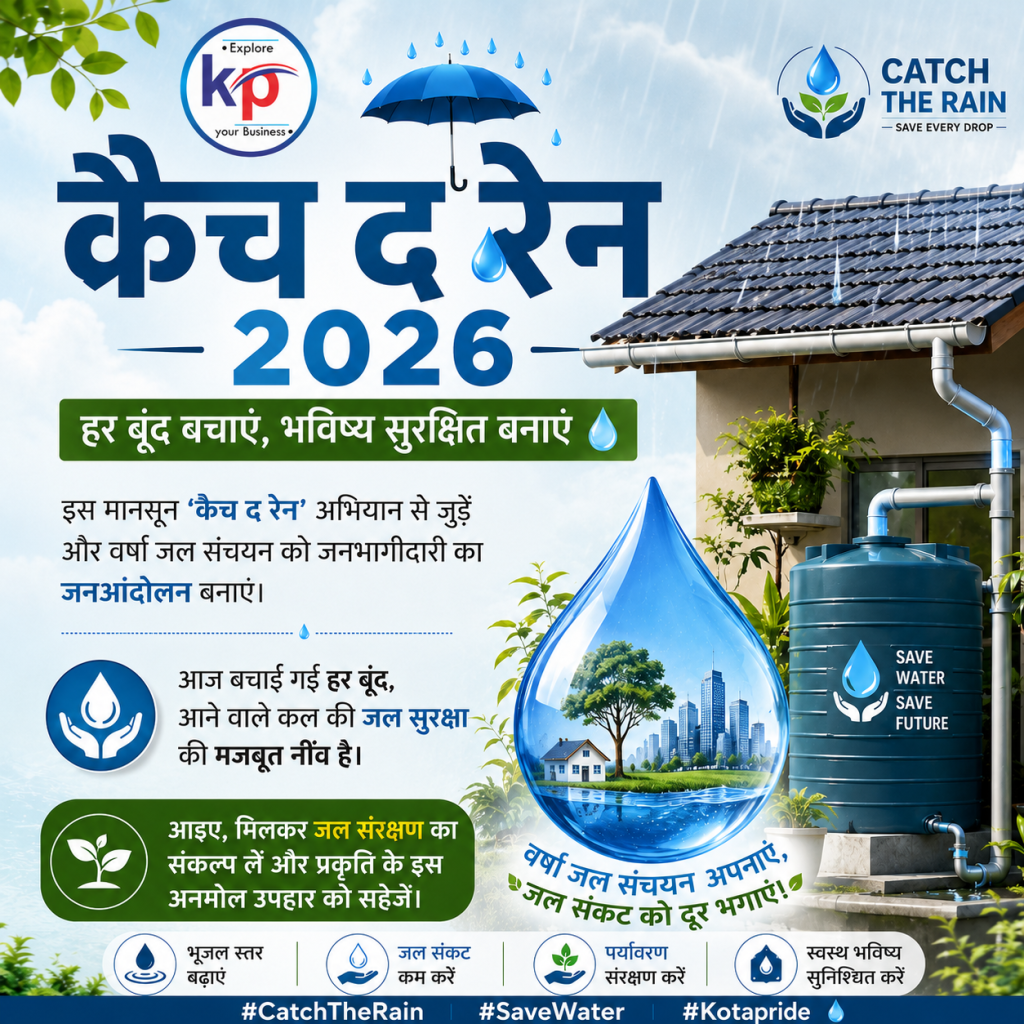
Catch the Rain 2026: Rainwater Harvesting is the Smartest Investment for a Water-Secure Future
Don’t Let the Rain Go to Waste
Every monsoon, India receives billions of litres of rainwater. Unfortunately, a significant portion of this precious resource flows into drains, rivers, and eventually the sea without being utilized. At the same time, many regions experience severe water shortages during summer.
The solution is simple and sustainable—Rainwater Harvesting.
The Catch the Rain 2026 campaign encourages every citizen to capture rainwater where it falls and when it falls. By adopting rainwater harvesting today, we can build a greener, healthier, and water-secure tomorrow.
What is Rainwater Harvesting?
Rainwater harvesting is the process of collecting rainwater from rooftops, open spaces, or other surfaces and storing it for future use or directing it underground to recharge groundwater.
Instead of wasting rainwater, we can use it for:
- Gardening
- Cleaning and washing
- Agriculture
- Groundwater recharge
- Domestic non-drinking purposes
- Industrial applications
Why India Needs Rainwater Harvesting More Than Ever
India is facing increasing pressure on its water resources due to:
- Rapid urbanization
- Population growth
- Climate change
- Irregular rainfall
- Falling groundwater levels
- Excessive dependence on borewells
Every year, several cities experience water shortages despite receiving heavy rainfall during the monsoon. Rainwater harvesting bridges this gap by storing nature’s gift for future use.
Major Benefits of Rainwater Harvesting
1. Conserves Water
Every litre of rainwater collected reduces dependence on freshwater resources.
2. Recharges Groundwater
Stored rainwater naturally replenishes underground aquifers, improving groundwater availability.
3. Reduces Water Bills
Using harvested rainwater for non-drinking purposes lowers household and commercial water expenses.
4. Prevents Urban Flooding
Proper rainwater management reduces waterlogging and pressure on drainage systems.
5. Protects the Environment
Rainwater harvesting reduces soil erosion, supports greenery, and promotes ecological balance.
6. Ensures Water Availability During Drought
Stored rainwater becomes a valuable backup during periods of low rainfall.
Easy Rainwater Harvesting Tips
You don’t need expensive infrastructure to begin saving water.
For Homeowners
- Install rooftop rainwater harvesting systems.
- Keep rooftop gutters clean.
- Direct rainwater into storage tanks.
- Recharge groundwater through soak pits.
For Schools & Colleges
- Conduct awareness campaigns.
- Install demonstration harvesting units.
- Encourage students to become Water Ambassadors.
For Businesses & Industries
- Install large-capacity rainwater storage systems.
- Integrate rainwater harvesting into CSR initiatives.
- Promote sustainable water management practices.
For Communities
- Restore ponds and lakes.
- Create recharge wells.
- Organize local water conservation drives.
- Plant more trees to improve water retention.
Small Steps That Make a Big Difference
Along with rainwater harvesting, every citizen can contribute by:
- Turning off taps when not in use
- Repairing leaking pipelines
- Reusing greywater wherever possible
- Using water-efficient fixtures
- Watering plants during early morning or evening
- Spreading awareness about water conservation
Catch the Rain 2026: A People’s Movement
The success of water conservation depends on collective participation.
When individuals, schools, businesses, housing societies, industries, and local communities work together, rainwater harvesting becomes a nationwide movement rather than just a government initiative.
Every rooftop has the potential to become a source of water security.
How Kotapride Promotes Environmental Awareness
At Kotapride, we believe awareness creates action. Through informative blogs, educational campaigns, social media content, and digital awareness initiatives, we encourage people to adopt sustainable practices that benefit both society and the environment.
Together, we can inspire communities to save water and protect our natural resources.
Conclusion
Water is life, and every drop is precious. Rainwater harvesting is one of the simplest and most effective ways to address water scarcity while protecting our environment.
This monsoon, don’t let rainwater go to waste.
Harvest Rain Today. Secure Water Tomorrow.
Every Drop Saved is a Step Towards a Sustainable Future.
Frequently Asked Questions (FAQs)
What is the main objective of Catch the Rain 2026?
The campaign encourages citizens to collect and conserve rainwater where it falls and when it falls, helping improve water security across India.
Is rainwater harvesting expensive?
No. Simple rooftop systems are affordable, and the long-term savings on water bills often outweigh the installation cost.
Can harvested rainwater be used for drinking?
It can be used for drinking only after proper filtration and purification. Otherwise, it is ideal for gardening, cleaning, flushing, and groundwater recharge.
Who should install rainwater harvesting systems?
Everyone—including homeowners, schools, offices, factories, apartments, hospitals, hotels, and industries—can benefit from rainwater harvesting.
Why should we save rainwater?
Saving rainwater helps conserve freshwater resources, recharge groundwater, reduce flooding, lower water bills, and ensure water availability for future generations.

